 |
| Rugby Sevens teams minus one who went home via the hospital! |
Wednesday, 29 June 2016
Rugby Sevens Tournament
Congratulations to our Rugby Sevens teams. Placing in both pools, with a first place win in Pool One.

Sunday, 26 June 2016
Matariki Kite Day
 |
| Kapa Haka |
This week we celebrated Matariki. We shared star biscuits kindly baked by the junior school. We were treated to a pre-lunch performance by our kapa haka ropu on Friday. To top off the week we completed our celebrations with a wonderful kite flying afternoon.
 Students across the school designed and built their own kites. We then walked to our local rugby ground and, despite some passing showers and a very light breeze, everyone had a go at flying their kite. It was great fun!
 |
| "Let's Go Fly A Kite." |
 |
| The tetrahedron kite caught the wind and, sadly, the rain. |
 |
| Sun Kite. |
 |
| This decorative kite flew well! |
 |
| Kite pre-flight. |
 |
| A box kite under construction from bamboo and lots of hot glue! |
 |
| A lot of time was spent creating this decorative kite. |
 |
| Ghost Kite |
 |
| Two students made 'safe' hot air balloons. They were too safe and didn't lift. Our next mission is to make the slightly 'riskier' model. |
 |
| Batman Kite |
 |
| Small Tetrahedron Kite |
 |
| Decorative Matariki Kite |
Wednesday, 15 June 2016
Prism Tents
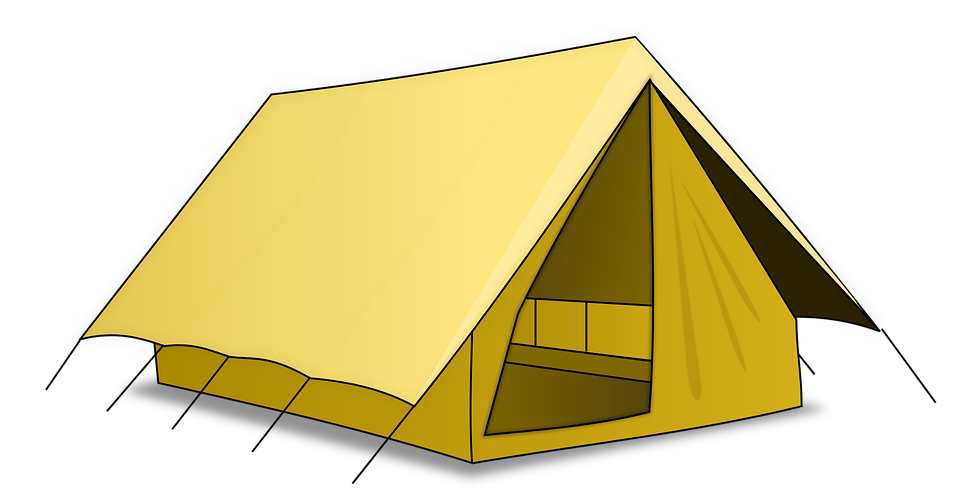
We investigated shapes for tents. We had to design and make a model of a tent. Many of the shapes we made were actually prisms.
Then we had to write about the mathematics within our tent. The writing should include dimensions, properties of the shapes, and relevant te reo pāngarau.
|
We are learning to:
Identify classes of two- and three-dimensional shapes by their geometric properties.
Relate three-dimensional models to two- dimensional representations, and vice versa. | |
Summer
| ||
Sunday, 29 May 2016
Autumn / ngahuru is well and truly here and this week we wrote poems to acknowledge the season. To begin our writing we had to stand outside on a cold autumn morning and look southward. There in the distance we could see the Southern Alps and Aoraki, Mount Cook. To the west we could see the Tasman Sea rolling ashore. Our northern view was of the Twelve Apostles, the hills above Greymouth, also known as the two tuatara. We hope you enjoy our writing.
WALT use a range of language features such as simile, metaphor, alliteration and personification.
Context: Autumn Poetry
Success Criteria: We will write a free verse poem to express our experience of a Tai Poutini autumn. The poem will include our choice of language features but it must also contain information that tells the reader where we are in the world. We may choose to use te reo Māori to enhance our writing.
| |||||
Autumn/Ngahuru
| |||||
Fern
| |||||
Saturday, 21 May 2016
Mihi Mahi
Kia ora
Earlier this year Ruma Tahi created visual mihi. We have had these linked to our learning site and now we would like to share them through our blog site. Waiho i te toipoto, kaua i te toiroa. "Let us keep close together, not far apart".
Earlier this year Ruma Tahi created visual mihi. We have had these linked to our learning site and now we would like to share them through our blog site. Waiho i te toipoto, kaua i te toiroa. "Let us keep close together, not far apart".
Click on the link to listen to or view our mihi.
|  | ||
Learning Languages: WALT Compare and contrast cultural practices.
Social Science WALT Understand how people pass on and sustain culture and heritage for different reasons and that this has consequences for people.
|
Success Criteria: We can show that we understand the purpose of mihi and how it connects to our whakapapa/family tree. We have developed our sense of self and place. We have built on our pronunciation skills.
| ||
Subscribe to:
Posts (Atom)